Currently Empty: £0.00

September 20, 2026
0 Comments
What Is a Potjie? South Africa’s Three-Legged Pot Explained
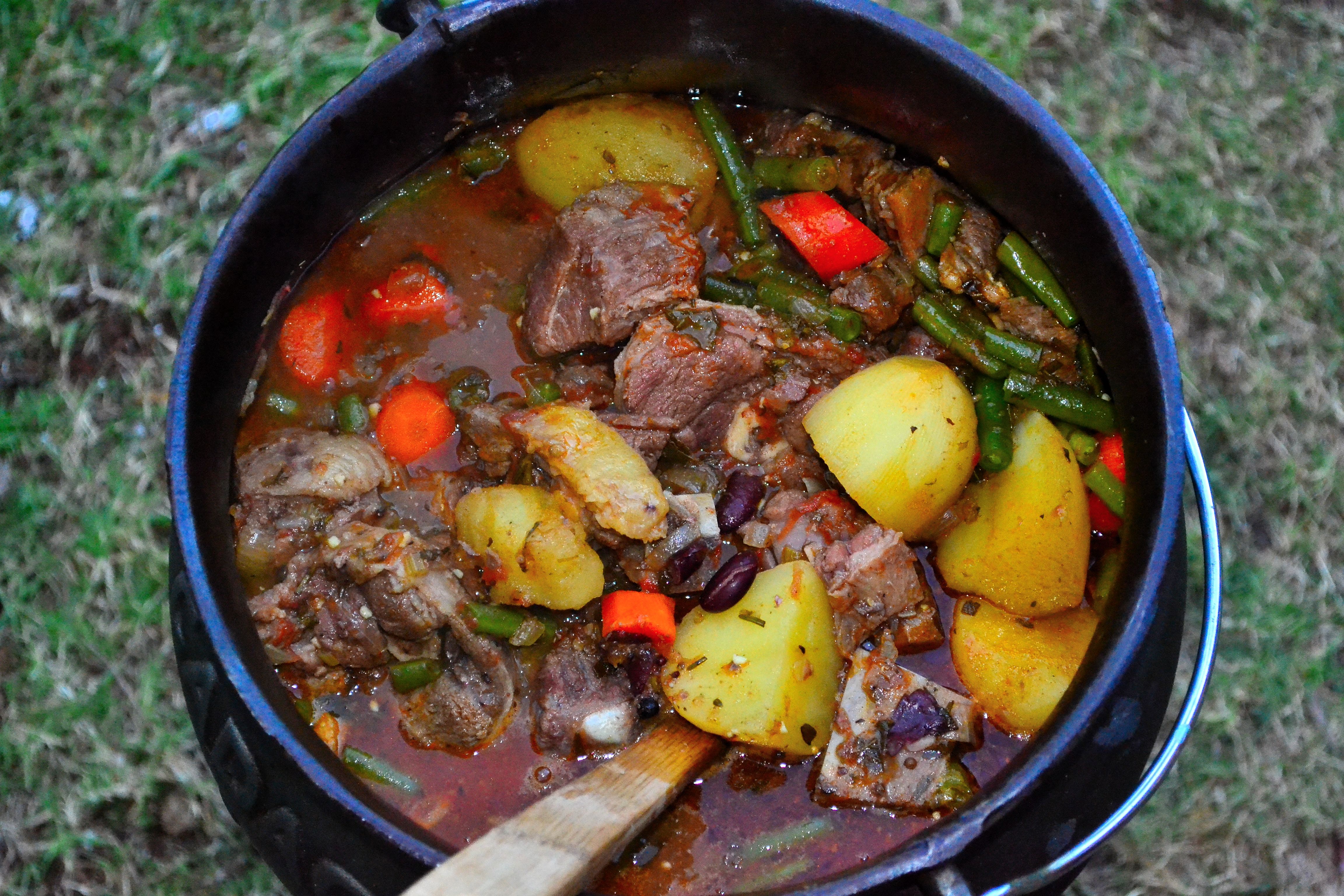
A potjie is a round, three-legged cast iron pot, and “potjiekos” is the slow-cooked stew you make in it over an open fire.
If you’ve grown up around a braai, the potjie’s usually sitting just off to the side of it, doing its own thing for hours while everyone’s attention is on the meat. And that’s genuinely how it’s meant to work. It’s not a faster way to cook a stew. It’s a slower one, on purpose.
Where the potjie comes from
The pot itself has Dutch roots. It’s descended from the Dutch oven brought to South Africa in the 18th century. But potjiekos as a dish is a Voortrekker invention, born out of necessity on the move. Each day when the wagons stopped, the pot went over the fire to simmer, fuelled by whatever was to hand: wood, charcoal, or when neither was available, twisted grass or dried dung.
New meat and bones went in as old ones were eaten, so the pot was less a single meal than an ongoing one, refreshed and kept going day after day.
What’s stuck around from that origin is the flavour logic: game meat, Cape Malay spices, and whatever vegetables and starches were on hand, all going in together and being left to do their own thing rather than being fussed over. That’s still the right instinct today, even with a supermarket trolley’s worth of ingredients instead of a hunted springbok.
Source: Potjiekos — Wikipedia
The one rule that actually matters: don’t stir it
If you take nothing else from this, take this: a potjie is built to cook in layers, not to be stirred like a pot on a stove. Heavy ingredients and meat go on the bottom nearest the heat, vegetables get layered on top in the order they cook, and the whole thing is left alone under the lid to steam and simmer itself into a stew. Stirring breaks that layering and you end up with something closer to a rushed soup than a proper potjiekos. I’ve watched people hover over a potjie with a spoon out of nerves more than anything else — leave it. The pot knows what it’s doing.
what actually works? Wood and heat explained
You want a steady, gentle heat under the pot, not a roaring fire. This is coals-and-embers territory, the same stage you’d cook meat over on the main grid, not the flame stage. A dense hardwood that burns down to long-lasting coals matters more here than for a quick grill session, because a proper potjie is a two-to-four-hour job, not a twenty-minute one. This is exactly where Kameeldoring or Rooikrans wood earns its keep over a softer, faster-burning wood — you don’t want to be feeding the fire constantly while you’re supposed to be leaving the lid alone.
If you’ve never built a proper bed of coals from scratch, how to light a braai fire like a pro covers exactly that. The potjie just needs you to let that fire burn down further than you would for meat, into a gentler, longer-lasting glow.
Dan’s tip
There was a well-documented 1998 case of lead contamination found in cheap imported cast iron potjie pots — exactly the kind of corner-cutting that shows up in the cheapest imports rather than pots built and tested properly. Buy from a source that can tell you where the pot’s actually made and tested, not just whoever’s cheapest that week.
Buying a potjie — what to actually check
Size matters more than people expect — a small potjie for a family meal and a large one for a crowd aren’t interchangeable, so buy for the cooking you’ll actually do most often rather than the one big event a year. Beyond size, the thing to actually check is the pot itself — buy from a source that can tell you where the pot’s actually made and tested, not just whoever’s cheapest that week.
Our Potjie Pot and Braai BBQ Grid Collapsible Tripod Stand is built with exactly that in mind — a proper stand height for a steady coal bed underneath, not a wobbly afterthought bolted onto a pot that was designed for a stovetop.
Potjie FAQs
What is a potjie?
A potjie is a round, three-legged cast iron pot used to cook potjiekos — a slow-simmered South African stew — over an open fire or coals. The three legs let it stand directly over the coal bed, and the design traces back to the Dutch oven brought to South Africa in the 18th century.
What is potjiekos and how do you cook it?
Potjiekos is the slow-cooked stew made in a potjie, traditionally layered rather than stirred — meat and heavier ingredients go on the bottom near the heat, with vegetables layered on top in the order they need to cook. It’s left alone under the lid over gentle coals for two to four hours rather than stirred like a stovetop stew.
Do you stir a potjie while it’s cooking?
No — this is the most important rule of cooking one properly. A potjie is built to cook in layers under its own steam and heat; stirring breaks that layering and turns the dish into something closer to a rushed soup. Leave the lid on and let it simmer undisturbed.
What wood or fuel is best for a potjie?
A dense hardwood that burns down to long-lasting coals, such as Kameeldoring or Rooikrans, works best — a potjie needs gentle, steady heat over two to four hours, not a quick, hot fire that needs constant feeding.